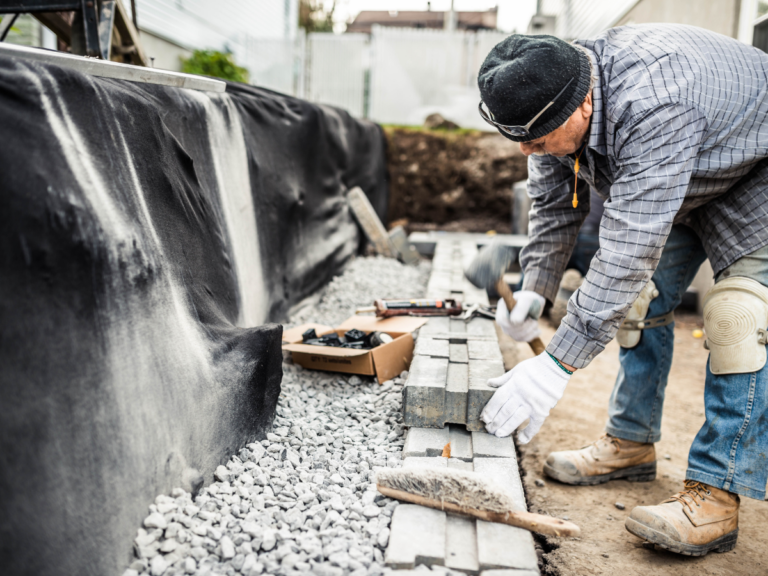
A retaining wall is built to handle pressure, drainage, and changing weather conditions, but it still needs routine care to stay strong over time.
In Atlanta, heavy rainfall, shifting soil, tree roots, and seasonal temperature changes can gradually affect even well-built retaining walls if small issues go unnoticed. Retaining wall maintenance is about catching problems early before they become expensive repairs.
Regular inspections, proper drainage management, vegetation control, and timely crack or joint repairs can help preserve the wall’s structural integrity and appearance. Different materials, including natural stone, concrete block, brick, and timber, also have unique maintenance needs.
By following a consistent maintenance routine, Atlanta homeowners can extend the life of their retaining walls, protect surrounding landscaping from erosion, and keep outdoor spaces safe, functional, and visually appealing for years to come.
Retaining Wall Maintenance Tips for Better Drainage and Stability
How Should Atlanta Homeowners Perform Seasonal Retaining Wall Inspections?

Seasonal inspections are one of the simplest ways to catch retaining wall problems before they become expensive structural repairs.
Atlanta homeowners should pay particular attention to drainage, soil movement, cracking, and changes in alignment because heavy rain and clay-rich soils can place significant pressure on retaining structures over time.
A practical retaining wall maintenance schedule includes a thorough inspection at least twice a year, along with additional checks after unusually heavy storms.
Spring and fall are useful times because they allow homeowners to assess winter movement, prepare for periods of heavier rainfall, and catch developing drainage problems before they worsen.
Start With the Wall’s Alignment and Overall Shape
Stand back far enough to view the entire wall rather than examining only individual blocks or stones. A retaining wall should generally maintain the same alignment it had when installed.
Look for sections that appear to lean, bow outward, bulge, or shift compared with surrounding areas. Small changes can be easier to recognize by comparing one section with another or by taking photos during each seasonal inspection.
Movement does not always mean immediate failure, but it deserves attention. A growing bulge or increasing lean can indicate pressure from saturated soil, inadequate drainage, settlement, or failure within the wall’s base or reinforcement system.
Cracks also need context. A small surface crack may be cosmetic, while widening cracks, separated joints, or cracks accompanied by displacement suggest that the wall is moving rather than simply aging.
Check Drainage After Heavy Rain
Water management should be a major part of retaining wall maintenance in Atlanta. The region’s dense clay soils tend to absorb water slowly, which can increase runoff and allow moisture to accumulate behind walls if drainage is inadequate.
Atlanta Hardscape Kings notes that poor drainage can contribute to cracking, erosion, bowing, and even wall failure when water pressure builds behind the structure.
After a significant storm, inspect the wall while the drainage pattern is still easy to see. Look for standing water behind or above the wall, saturated soil, muddy discharge at the base, blocked weep holes, or runoff flowing over the top.
Water should move through designed drainage paths rather than collecting behind the wall. Keeping hardscape drainage systems clear and functional is especially important on sloped Atlanta properties, where runoff can quickly concentrate against a retaining structure.
Do not assume that water emerging near the wall automatically means the drainage system is failing. Some systems are specifically designed to release water through weep holes or gravel drainage zones.
The concern is water appearing where it did not previously, persistent saturation, erosion, or drainage outlets that have stopped flowing.
Look for Erosion and Soil Movement Around the Wall
The condition of the soil surrounding the retaining wall can reveal problems before the wall itself shows major damage.
Inspect the ground above the wall for depressions, channels, or areas where soil appears to be washing away. Erosion can expose the back of the wall, remove supporting soil, or redirect runoff into places the original drainage system was not designed to handle.
At the base, watch for soil washout, gaps, exposed footing material, or areas that have settled noticeably. Plants or mulch can sometimes hide these changes, so move loose debris aside where necessary to inspect the transition between the wall and surrounding grade.
Atlanta’s clay-heavy soils can also expand and soften as moisture conditions change. That makes proper grading and drainage particularly important for long-term stability.
Inspect Drainage Openings and Nearby Runoff Sources
Leaves, mulch, roots, and sediment can obstruct visible drainage openings over time. Clear accessible debris from weep holes, grates, channels, or other outlets without altering the drainage system itself.
Also look beyond the wall. A downspout that has shifted, a clogged gutter, a newly landscaped area, or a changed slope can send more water toward the retaining wall than it was originally designed to manage.
Seasonal hardscape maintenance before wetter and colder weather should therefore include checking gutters, downspouts, drainage paths, and grading in addition to inspecting the wall face itself. Atlanta Hardscape Kings recommends watching for ponding, soil washout, clogged drainage components, and changes in surface flow after rainfall.
Know Which Warning Signs Need Professional Attention
Some retaining wall changes should not be treated as routine cosmetic maintenance.
Schedule a professional evaluation if you notice:
- A wall that is visibly leaning or bowing
- Bulging that appears to be increasing
- Large or widening cracks
- Separation between blocks, stones, or wall sections
- Significant erosion around the base
- Persistent water buildup behind the wall
- Sudden settlement or sinking
- Movement after a major storm
These symptoms can indicate problems with drainage, soil pressure, the wall’s foundation, reinforcement, or the original construction.
Retaining wall maintenance is most effective when homeowners look for change rather than waiting for obvious failure. A brief seasonal inspection, combined with an extra check after major rain, can reveal drainage problems, erosion, and movement while corrective work is still more manageable.
What Are Effective Drainage Solutions to Protect Retaining Walls in Atlanta?
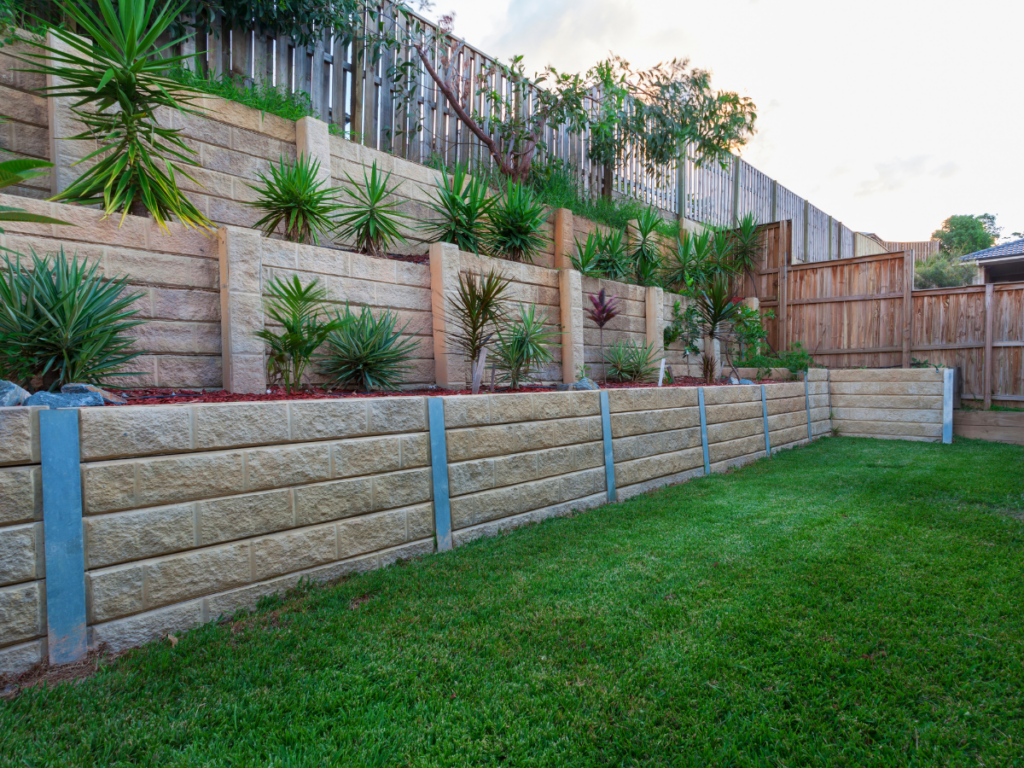
Good drainage is one of the most important parts of retaining wall maintenance because the wall is not only holding back soil. It also has to withstand the pressure created when water collects within that soil.
This matters especially on Atlanta properties with clay-heavy ground. Clay drains slowly and can hold substantial moisture after periods of heavy rain. If water cannot move away from the retained soil, pressure builds behind the wall and may contribute to bulging, cracking, shifting, erosion, or eventual structural failure.
Effective drainage therefore needs to address two different problems: surface runoff flowing toward the wall and water accumulating within the soil behind it.
How Does Drainage Behind a Retaining Wall Work?
A properly designed retaining wall typically includes a drainage zone behind the structure rather than relying on the wall face alone to manage water.
Free-draining gravel or similar aggregate can create a path for water to move downward instead of remaining trapped against the wall. A perforated drainpipe is often installed near the base to collect that water and direct it toward a suitable outlet.
Some wall systems also use weep holes or other drainage openings that allow collected water to escape. The exact design depends on the wall material, height, slope, soil conditions, and where runoff can safely discharge.
These components work together to reduce hydrostatic pressure. Atlanta Hardscape Kings notes that retaining walls used for erosion control and low-maintenance landscapes benefit from drainage layers and weep systems that prevent water pressure from building behind the structure.
Why Is Surface Grading Just as Important?
A drain behind the wall cannot compensate for a landscape that continually directs large amounts of surface water toward it.
Grading shapes the surrounding ground so rainfall moves toward appropriate drainage areas instead of collecting at the top or base of the retaining wall. On sloped properties, even small changes in grade can substantially alter where runoff travels during a storm.
Homeowners should watch for depressions above the wall, channels forming in the soil, or water flowing over the wall during heavy rain. These patterns may indicate that surface drainage needs correction.
Thoughtful grading and hardscape drainage planning should account for how water naturally crosses the entire property rather than treating the retaining wall as an isolated feature.
Are French Drains Always the Right Solution?
French drains can be useful, but they are not a universal fix for every retaining wall drainage problem.
A French drain generally consists of a gravel-filled trench containing perforated pipe. It collects subsurface water and carries it toward an outlet. Depending on the site, this system may be installed behind a retaining wall, along a wet area, or elsewhere in the landscape to intercept water before it reaches the structure.
The important question is not simply whether a French drain is present. The drain must be correctly located, adequately sized, properly sloped, and connected to an appropriate discharge point.
A poorly designed drain can still leave water trapped behind the wall or simply move the problem to another part of the property.
What Should Homeowners Inspect After Heavy Rain?
Rain provides one of the best opportunities to evaluate drainage performance because problems become visible while water is actively moving through the landscape.
As part of retaining wall maintenance, check for:
- Water pooling above or behind the wall
- Runoff spilling over the top
- Mud or soil washing from joints
- Erosion near the base
- New wet areas that remain saturated after surrounding soil begins drying
- Drain outlets that no longer discharge water
- Sediment, roots, leaves, or mulch blocking visible openings
Also inspect nearby downspouts, swales, and drainage channels. A relocated downspout or clogged surface drain can suddenly send far more water toward a retaining wall than the original system was designed to handle.
When Does a Drainage Problem Need More Than Maintenance?
Clearing debris from an accessible drain or correcting a minor surface obstruction may be straightforward. Recurring water buildup is different.
If the same section remains saturated after storms, soil continues washing away, the wall is beginning to lean or bulge, or water appears where it never did before, the problem may involve the drainage layout itself rather than routine maintenance.
At that point, adding another pipe or opening without understanding the cause can make conditions worse. The property may need changes to grading, subsurface drainage, runoff collection, or the wall’s drainage layer.
Effective retaining wall maintenance is therefore not just about keeping drains clear. It is about watching how water enters, moves through, and leaves the entire area surrounding the wall.
When those paths remain controlled, the wall is exposed to less unnecessary pressure and has a better chance of remaining stable over the long term.
How Can Homeowners Identify and Repair Common Retaining Wall Structural Issues?
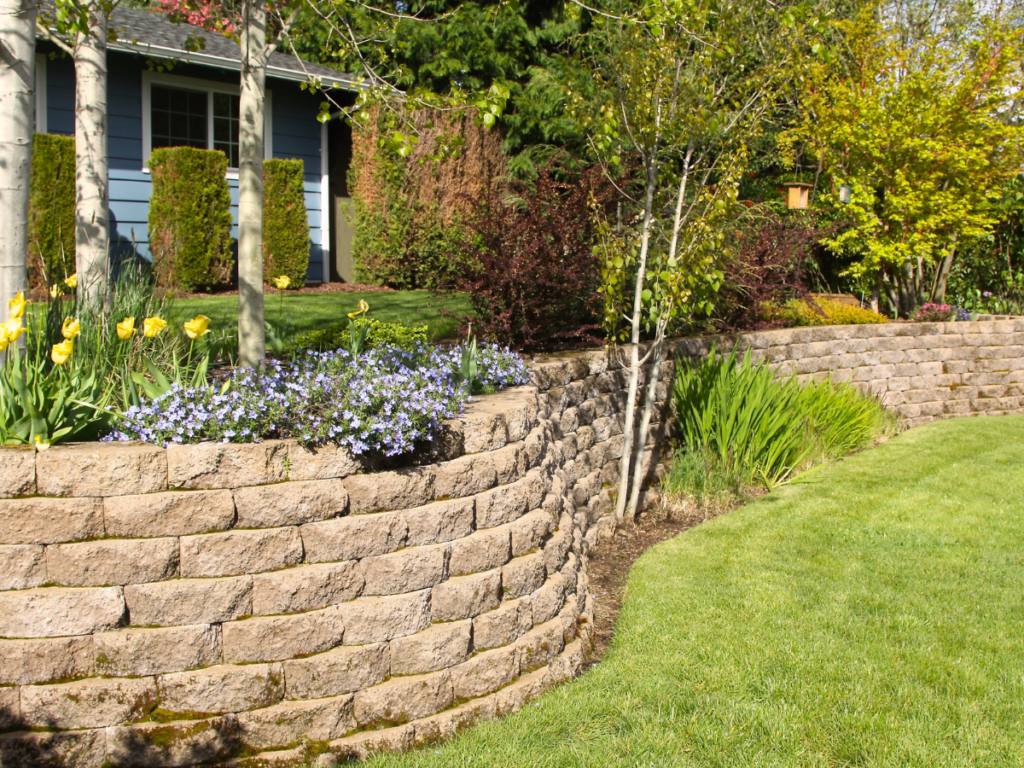
Cracks, settlement, leaning, and separated wall sections can all indicate retaining wall problems, but they do not necessarily require the same repair.
A small surface crack may need little more than monitoring or material-specific repair, while a wall that is bowing outward may be responding to soil pressure, drainage failure, or movement at the base.
Effective retaining wall maintenance starts with identifying what changed and why. Repairing the visible damage without addressing the condition causing it can leave the wall vulnerable to the same problem returning.
What Causes Retaining Walls to Crack or Settle?
Retaining walls are designed to resist the pressure of the soil they hold back, but changing site conditions can increase that load or reduce the wall’s ability to support it.
Water is a common factor. When drainage behind a wall is inadequate, saturated soil becomes heavier and hydrostatic pressure can push against the structure. Erosion can create a different problem by washing soil away from beneath or around the wall, reducing support.
Settlement may also originate at the base. If the footing or compacted base was inadequate, sections of the wall can sink unevenly. Atlanta’s clay-heavy soils add another variable because moisture changes can affect soil volume and stability.
Other causes can include tree-root growth, excessive loads above the wall, deterioration of timber or mortar, impact damage, or a retaining wall that was not adequately designed for its height and site conditions.
Does Every Crack Mean the Wall Is Failing?
No. The pattern and surrounding movement matter more than the presence of a crack alone.
Hairline cracks in concrete or mortar may remain relatively stable, particularly if there is no displacement on either side. Wider cracks, stair-step cracking, recurring cracks after previous repairs, or cracks accompanied by bulging or settlement deserve closer attention.
The distinction is important because repairing a concrete crack can address localized surface damage, but filling the opening does not correct an unstable base or excessive pressure behind the wall.
Homeowners can mark the ends of a crack or photograph it with a ruler for scale, then compare it over time. A crack that continues widening or changes after heavy rainfall is more concerning than one that remains unchanged.
What Does Leaning or Bulging Usually Indicate?
A wall that leans or bows outward is showing movement, not simply cosmetic wear. Bulging often develops when pressure behind the wall exceeds what the structure can resist.
Poor drainage, saturated soil, insufficient reinforcement, or excessive retained loads can all contribute. A wall may also tilt if the base settles or rotates.
This type of movement should not be corrected by simply pushing blocks back into place or filling visible joints. The wall may need to be partially dismantled so the base, drainage system, retained soil, and reinforcement can be evaluated.
For segmental block walls, separated courses or blocks shifting out of alignment can provide an early visual warning. Concrete, masonry, stone, and timber walls may show different symptoms, but any measurable change in alignment should be taken seriously.
Which Retaining Wall Repairs Can Be Localized?
Localized repair is most appropriate when the damage is limited and the underlying wall remains stable. Possible examples include replacing an isolated damaged block, repairing deteriorated mortar, addressing a minor nonmoving concrete crack, or restoring a small area affected by surface erosion.
The repair material and method should match the wall construction rather than relying on one crack filler or patching product for every situation.
Drainage problems may also be corrected without rebuilding the entire wall if the structure has not yet moved significantly. Restoring blocked outlets, correcting runoff, or repairing a damaged drain can sometimes remove the condition that is placing unnecessary pressure on the wall.
These repairs should still become part of ongoing retaining wall maintenance. A patched crack or corrected drainage problem should be checked during future inspections to confirm that movement has stopped.
When Does a Retaining Wall Need Structural Repair or Rebuilding?
Once a wall has significantly leaned, bowed, settled, or separated, surface patching is unlikely to provide a durable solution.
Depending on the cause, more substantial work may involve removing part or all of the wall, rebuilding the base, correcting drainage, replacing unsuitable backfill, or adding reinforcement appropriate to the wall system. Taller or heavily loaded walls may require engineered reinforcement or a redesigned structure.
This is why simply “adding rebar” is not a universal repair. Reinforcement must be part of a system designed to transfer loads correctly. Likewise, epoxy injection can seal certain concrete cracks, but it cannot stabilize a wall that is continuing to rotate or settle.
A retaining wall that is visibly leaning, rapidly changing, supporting a driveway or building area, or showing signs of imminent collapse should be evaluated promptly. Keep people and vehicles away from the affected area until its stability is understood.
Repair the Cause, Not Just the Damage
The most reliable repair begins with determining whether the underlying problem is drainage, erosion, soil movement, base failure, material deterioration, excessive loading, or a combination of factors.
That diagnosis prevents repeated patchwork. A crack caused by ordinary surface deterioration requires a very different response from one created by a shifting foundation. Likewise, rebuilding a wall without correcting the drainage conditions behind it can recreate the same failure.
Good retaining wall maintenance therefore includes more than fixing what is visible. The goal is to restore the conditions that allow the wall to remain stable, then continue monitoring it for renewed movement, drainage problems, or erosion. damage and the specific wall materials used.
Which Materials and Preventative Treatments Help Atlanta Retaining Walls Last Longer?
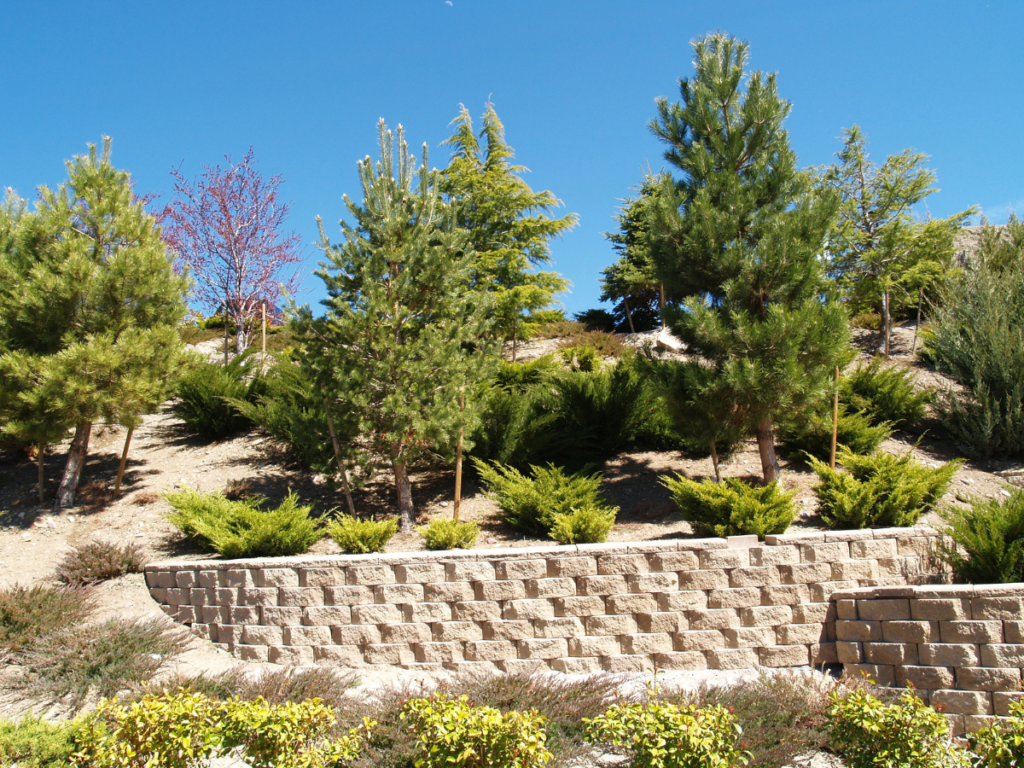
Long-term retaining wall performance depends on more than choosing a material that looks durable. The wall system must also suit the height, soil conditions, drainage needs, and loads it will support.
In Atlanta, where clay-heavy soils and periods of substantial rainfall can place added stress on retaining structures, proper base preparation and water management are often just as important as the material itself.
Preventative treatments can protect exposed surfaces from staining and weathering, but they cannot compensate for poor drainage or structural movement.
Effective retaining wall maintenance therefore combines appropriate materials, sound construction, drainage, and surface care rather than relying on one protective coating.
Which Retaining Wall Materials Perform Well in Atlanta?
Concrete is commonly used where strength, consistency, and structural capacity are priorities. Poured concrete can be engineered for substantial loads, while segmental concrete retaining wall blocks provide a modular option that can accommodate many residential landscapes.
Both depend on a properly prepared base and appropriate drainage behind the wall. Natural stone offers excellent durability and works especially well where homeowners want the wall to blend into the surrounding landscape.
Stone walls can range from mortared construction to gravity-based systems, so performance depends heavily on how the wall is designed and installed rather than the stone alone.
Concrete pavers, natural stone, and other hardscape materials suited to Atlanta landscapes each have different maintenance requirements and performance characteristics.
Material selection should consider drainage, expected loads, installation method, appearance, and the amount of maintenance the homeowner is willing to perform.
Is Timber a Good Choice for Retaining Walls?
Timber can provide a natural appearance and may have a lower initial cost than masonry or engineered concrete systems, but it generally requires more attention over time.
Because wood is an organic material, prolonged contact with moisture and soil can lead to decay. Retaining-wall timber should be rated for the intended ground-contact application, and drainage remains essential so the wood is not continuously exposed to saturated soil.
Homeowners should regularly check timber walls for soft spots, splitting, insect damage, loose fasteners, and sections beginning to bow. Once structural timbers have significantly deteriorated, surface treatments alone will not restore their load-bearing capacity.
For that reason, timber may suit some smaller landscape applications, but material choice should be based on wall height, structural demands, expected lifespan, and site conditions rather than price alone.
Should Concrete, Stone, or Paver Walls Be Sealed?
Sealing can be useful for some retaining wall materials, particularly porous concrete, manufactured units, and certain types of natural stone. A compatible sealer can reduce surface water absorption, staining, and weather-related deterioration while making exposed surfaces easier to clean.
That does not mean every retaining wall should automatically be sealed. Natural stone varies widely in porosity, and some materials need to breathe rather than being covered with a film-forming coating. Existing moisture trapped within masonry can also cause problems if an unsuitable product is applied.
The best approach is to choose a product designed for the specific material and exposure conditions. Proper hardscape sealing begins with a clean, dry, stable surface and a sealer compatible with the stone, concrete, or paver system.
Sealing should be viewed as surface protection, not structural waterproofing. It will not stop hydrostatic pressure from building behind a wall or correct inadequate drainage.
Do Retaining Walls Need a Moisture Barrier?
Not every retaining wall requires the same type of moisture barrier, and simply attempting to block water from reaching the wall is not enough.
Retaining walls need a controlled path for water to escape. Depending on the wall system, that may involve free-draining aggregate, perforated drainage pipe, geotextile fabric, weep openings, waterproofing membranes, or a combination of these components.
A membrane may help protect certain concrete or masonry surfaces from direct moisture exposure, but water still needs somewhere to go. If drainage behind the wall is inadequate, preventing moisture from moving through the wall face can leave pressure trapped in the retained soil.
For this reason, moisture control should be designed as part of the drainage system rather than treated as a separate coating decision.
How Can Preventative Maintenance Extend Wall Life?
The most useful preventative care is usually straightforward: keep drainage outlets clear, prevent soil and mulch from blocking weep holes, monitor cracks and movement, control runoff above the wall, and clean exposed materials with methods appropriate for the surface.
Sealers should be inspected periodically rather than applied on a rigid schedule. Wear varies according to material, product type, sun exposure, rainfall, and surface condition.
Retaining wall maintenance should also change when the wall begins showing structural symptoms. Leaning, bulging, widening cracks, settlement, or recurring drainage problems require diagnosis rather than another coat of sealer or a cosmetic patch.
Durability ultimately comes from the complete system. A well-chosen material supported by a stable base, effective drainage, appropriate reinforcement, and compatible surface protection will generally perform better than a supposedly premium material installed without those fundamentals.
When Should Atlanta Homeowners Seek Professional Help for Retaining Wall Maintenance?
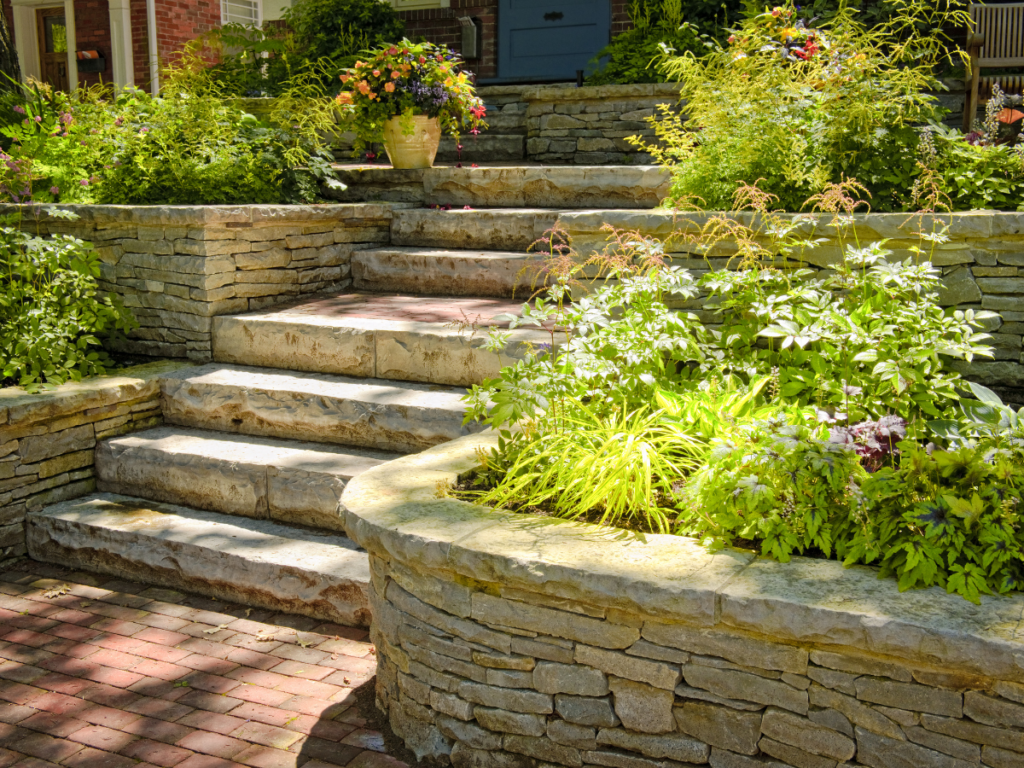
Not every retaining wall problem requires major structural work. Minor surface wear, isolated staining, or debris around an accessible drainage outlet may be manageable through routine retaining wall maintenance.
The situation changes when the wall begins to move, drainage problems keep returning, or the cause of the damage is unclear. Professional evaluation is especially important because the visible symptom is not always the underlying problem.
A crack may originate from settlement, a leaning section may be responding to water pressure, and recurring erosion may point to grading or drainage problems elsewhere on the property. Repairing only what can be seen can leave the actual cause untouched.
Which Retaining Wall Problems Need Professional Evaluation?
Movement is one of the clearest reasons to bring in a professional. A wall that is leaning, bowing, bulging, sinking, or separating is no longer behaving as originally intended.
Other warning signs include:
- Cracks that are widening or returning after repair
- Multiple blocks or stones shifting out of alignment
- Significant erosion around the base
- Soil washing through joints
- Persistent water buildup behind the wall
- Drainage outlets that remain blocked or stop functioning
- Settlement that creates noticeable height differences along the wall
- Sudden changes following heavy rain
The combination of symptoms matters. A small crack in an otherwise stable wall is different from a crack accompanied by outward movement and saturated soil.
Walls supporting driveways, structures, steep slopes, or heavily used areas deserve particular caution because failure could affect more than the wall itself. If a section appears unstable or at risk of collapse, keep people and vehicles away until it has been evaluated.
Why Is Diagnosing the Cause More Important Than Choosing a Repair First?
A reliable repair starts with determining why the wall moved or deteriorated.
For example, rebuilding a section without correcting poor drainage may simply allow hydrostatic pressure to damage the replacement. Filling cracks will not stabilize a settling base. Adding blocks to the top of a wall that is already leaning can increase the load without addressing the structural problem underneath.
A professional assessment should therefore consider the wall as a system, including its base, retained soil, drainage, grading, reinforcement, surrounding slopes, and any loads above it.
Homeowners considering retaining wall repair and maintenance should expect the proposed solution to address the cause of the damage, not simply improve the wall’s appearance.
What Should a Retaining Wall Repair Estimate Include?
A useful estimate should make it possible to compare contractors based on the actual scope of work rather than the bottom-line price alone.
Ask what the contractor believes caused the problem and how the proposed repair addresses it. The scope should identify which portions of the wall will be repaired or rebuilt, what materials will be used, and whether drainage, excavation, backfill, base preparation, or reinforcement are included.
For more substantial projects, also ask:
- How runoff and water behind the wall will be managed
- Whether existing materials can safely be reused
- What type of base or footing will be installed
- Whether reinforcement is required
- How disturbed landscaping will be restored
- Who is responsible for determining whether permits or engineering are required
- What warranty applies to the completed work
Two estimates can differ significantly because one includes drainage correction and reconstruction while another covers only visible repairs. Comparing the scope makes those differences easier to understand.
How Should Homeowners Compare Retaining Wall Contractors?
Relevant retaining-wall experience matters more than general landscaping experience alone. Ask whether the contractor regularly works with the particular wall system involved, such as segmental block, concrete, natural stone, masonry, or timber.
Photos of completed projects can help demonstrate experience, but they should not replace technical questions. A contractor should be able to explain why the wall failed, what needs to change, and how the proposed construction will manage soil and water.
Insurance, applicable licensing requirements, references, and written warranty terms are also worth verifying. Requirements can vary depending on the location and scope of the work, so homeowners should avoid assuming that every retaining-wall project follows the same permitting or professional-design rules.
Be cautious if the proposed solution focuses entirely on cosmetic patching despite obvious movement, ignores persistent drainage problems, or provides little explanation of how the repaired wall will be supported.
When Is Rebuilding More Practical Than Continued Repair?
Localized damage does not automatically justify replacing an entire wall. If the base remains stable and the problem is confined to a small area, targeted repair may be appropriate.
Rebuilding becomes more likely when substantial sections have moved, the base has failed, drainage was poorly designed, structural components have deteriorated extensively, or previous repairs have repeatedly failed.
That decision should account for the condition of the whole structure rather than the age of the wall alone. Repeatedly repairing symptoms can eventually cost more while leaving the underlying instability unresolved.
Good retaining wall maintenance includes knowing when routine care has reached its limit. Once the wall shows structural movement, recurring drainage failure, or damage whose cause cannot be identified from the surface, professional diagnosis is the more useful next step.
Conclusion
Regular retaining wall maintenance can help Atlanta homeowners catch small problems before they develop into more serious structural concerns.
Watching for cracks, leaning, bulging, erosion, drainage issues, and shifting materials can provide early warning that a wall needs attention, while keeping drainage systems clear can help reduce damaging water pressure behind the structure.
When signs of deterioration appear, a professional assessment can help determine whether maintenance, repair, or reconstruction is needed.
For professional retaining wall solutions and expert hardscape services, choose Atlanta Hardscape Kings. If your retaining wall needs attention or you’re planning a new installation, call (470) 665-5283 to speak with the team at Atlanta Hardscape Kings or fill out the website form to get your free estimate today.