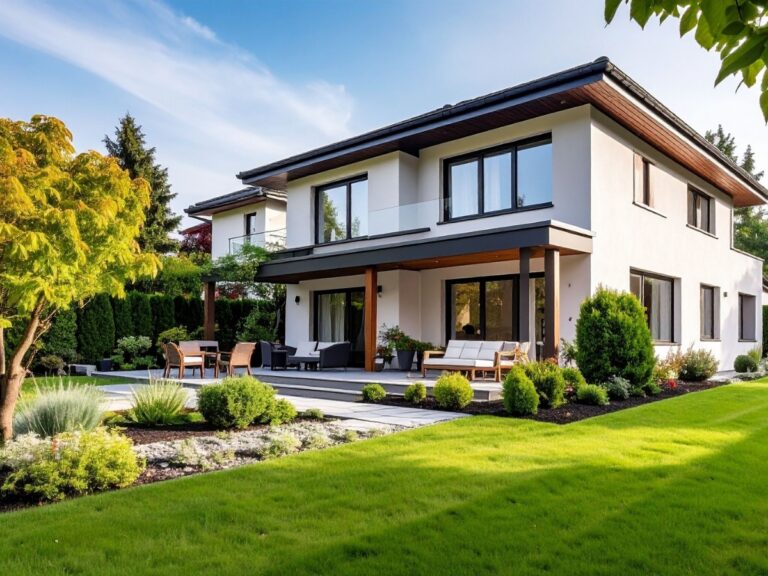
For Atlanta homeowners seeking a beautiful, functional yard without the constant upkeep, low maintenance landscaping centered on hardscaping offers an ideal solution. By incorporating durable materials like stone, pavers, and gravel into patios, pathways, and retaining walls, you can dramatically reduce watering, mowing, and weeding while creating defined, stylish outdoor living spaces.
In this article, we’ll explore how strategic hardscape design can transform your Atlanta property into an effortlessly elegant retreat that withstands the local climate and busy lifestyles with minimal ongoing care.
Low Maintenance Landscaping for a Beautiful, Effortless Yard
Why Hardscaping is Atlanta’s Best Low-Maintenance Landscaping Choice

For many Atlanta homeowners, hardscaping is the most practical way to achieve truly low maintenance landscaping. Replacing large, thirsty lawns and dense planting beds with patios, walkways, and other permanent features cuts down on the weekly chores that usually dominate yard care. Pavers, stone, and concrete do not need mowing, fertilizing, or seasonal replanting, and they stand up well to the region’s hot summers and periods of heavy rain. When those materials are installed over a well-prepared base with proper grading, they also help manage drainage so water moves away from the house instead of pooling in low spots.
In Metro Atlanta’s clay soils, that combination of stability and drainage has a big payoff. You see fewer muddy areas after storms, less erosion on slopes, and far less time spent trying to coax struggling grass to grow. The end result is a yard that feels finished and functional for most of the year but asks for very little daily attention. It is one of the reasons low-maintenance landscaping so often starts with a hardscape plan rather than another round of reseeding.
Atlanta Hardscape Kings is a family-owned company that designs and installs patios, retaining walls, artificial turf, fire pits, outdoor kitchens, walkways, driveways, and landscape lighting throughout the metro area. Their projects are built around durable materials, careful base preparation, and an understanding of how Atlanta’s soil and weather affect long-term performance. That local experience helps turn design ideas into outdoor spaces that stay usable and attractive without constant upkeep.
How Does Hardscaping Reduce Water Usage And Irrigation Needs?
Hardscaping also supports low maintenance landscaping by dramatically reducing how much water your yard needs. Large lawn areas lose moisture quickly in Atlanta summers, especially in full sun. When a portion of that turf is replaced with a paver patio, gravel court, or synthetic turf, there is simply less living material that needs regular irrigation. Remaining plants can be grouped into smaller, intentional beds that are easier to water efficiently and can be supported with drip irrigation instead of broad sprinkler coverage.
Permeable paver systems and gravel surfaces allow rainwater to pass through into the soil rather than running off into the street. This softens the impact of heavy downpours, helps recharge the ground beneath, and limits the washouts that often appear on sloped clay sites. It also means you can rely more on natural rainfall for surrounding plantings. When these choices are combined with drought-tolerant shrubs and groundcovers, water use and irrigation run times drop significantly over the course of a season.
What Makes Hardscaping Require Minimal Weeding And Pest Control?
Another advantage of hardscaping is the way it cuts down on weeds and pest problems. Continuous hard surfaces leave very few open spots where weed seeds can take hold. Beneath the visible surface, a compacted base and, where appropriate, a geotextile layer help block roots and keep soil from shifting up into joints. When joints are filled with polymeric or stabilized sand and edges are tightly finished, there is little organic material for weeds to use, so any growth that appears is usually sparse and easy to remove.
Shrinking the size and number of planting beds also changes how you maintain the space. Instead of chasing weeds through wide mulch fields, you focus on a few well-defined islands that can be refreshed quickly. With fewer dense, overgrown areas, there are also fewer hiding places and food sources for insects and small pests, which often reduces the need for chemical treatments. Taken together, these design and installation choices create outdoor areas that stay neat with only occasional touch-ups, which is exactly what most homeowners are looking for when they decide to invest in low maintenance landscaping.
What Are the Top Hardscaping Solutions for an Effortless Atlanta Yard?

The best hardscaping replaces labor-intensive landscape zones with durable surfaces and outdoor living features that need little routine care. Key categories include patios and walkways, retaining walls for slopes, artificial turf as a lawn alternative, fire pits and outdoor kitchens for outdoor living, and landscape lighting to extend use into the evening with low energy draw. Each element reduces specific chores—patios remove mowing, walls limit erosion and trimming, turf cuts watering and fertilizing, and LED lighting reduces bulb changes and power use. Match solutions to your site—slope, soil, and drainage—to maximize longevity and minimize future work. The following subsections dig into each feature and compare its practical uses around Atlanta.
Before the detailed descriptions, here’s a concise comparison showing maintenance, lifespan, water impact, and typical Atlanta use-cases for common hardscape options.
| Solution | Maintenance Level | Typical Lifespan | Water Impact | Atlanta Use-cases |
|---|---|---|---|---|
| Paver patios & walkways | Low (occasional joint care) | 15–30+ years with proper base | Low; permeable options reduce runoff | Entertaining areas, pathways, compact yards |
| Retaining walls (segmental/block) | Low (inspect drainage) | 25–50 years depending on drainage | Neutral; stabilizes soil and reduces erosion | Sloped lots, terracing, erosion control |
| Artificial turf | Low (brushing, debris removal) | 10–20 years depending on quality | Very low; eliminates irrigation need | Play areas, front lawns, pet zones |
| Fire pits / outdoor kitchens | Low-medium (seasonal cleaning) | 10–25 years depending on materials | Low (minimal planting around) | Entertainment zones, year-round use |
| Landscape lighting (LED) | Very low (infrequent maintenance) | 10+ years for LEDs | Low energy and water impact | Safety, curb appeal, evening use |
This snapshot shows how different elements trade off maintenance and lifespan for specific yard functions. Picking a mix that fits your site constraints gives the best long-term ease-of-care. The next sections break down each feature and offer installation tips.
How Do Patios and Walkways Provide Durable, Low Maintenance Surfaces?
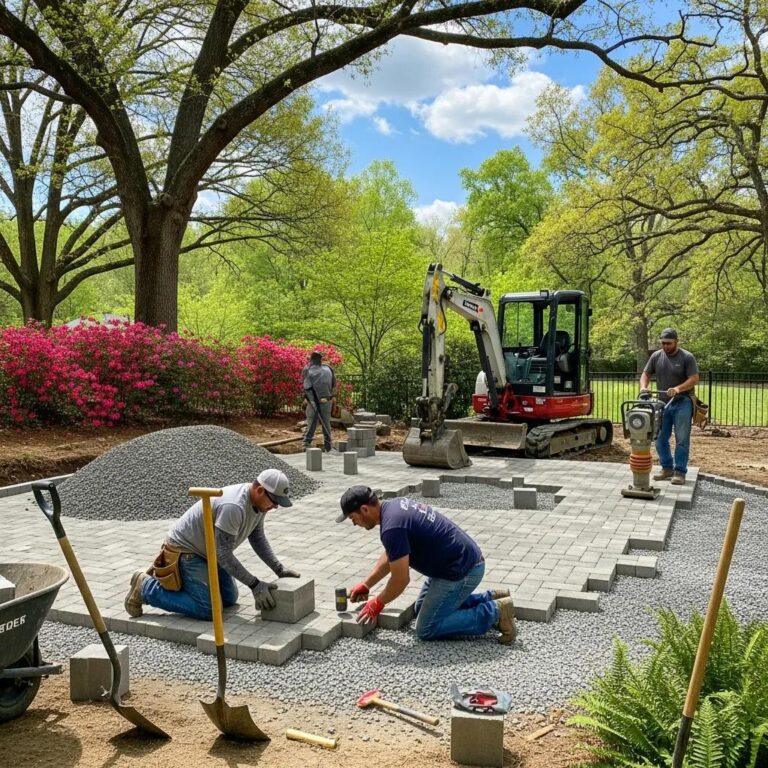
Patios and walkways create durable outdoor floors that eliminate mowing and define easy-to-maintain circulation when installed on a compacted base with solid jointing. Options—interlocking pavers, flagstone, poured or stamped concrete—each comes with different looks and maintenance needs: pavers are easy to repair and can drain well on a permeable base, while natural stone lasts long with occasional joint attention. Proper base prep and edge restraints prevent settling and shifting that invite weeds or unevenness, and sealing or surface treatments help resist stains and freeze-thaw damage. Routine care is simple—sweeping, occasional pressure washing, and checking joints—making patios a core element of a low-maintenance yard. Material choice and installation quality strongly affect cleaning frequency and lifespan.
Why Are Retaining Walls Essential for Erosion Control and Low Maintenance?
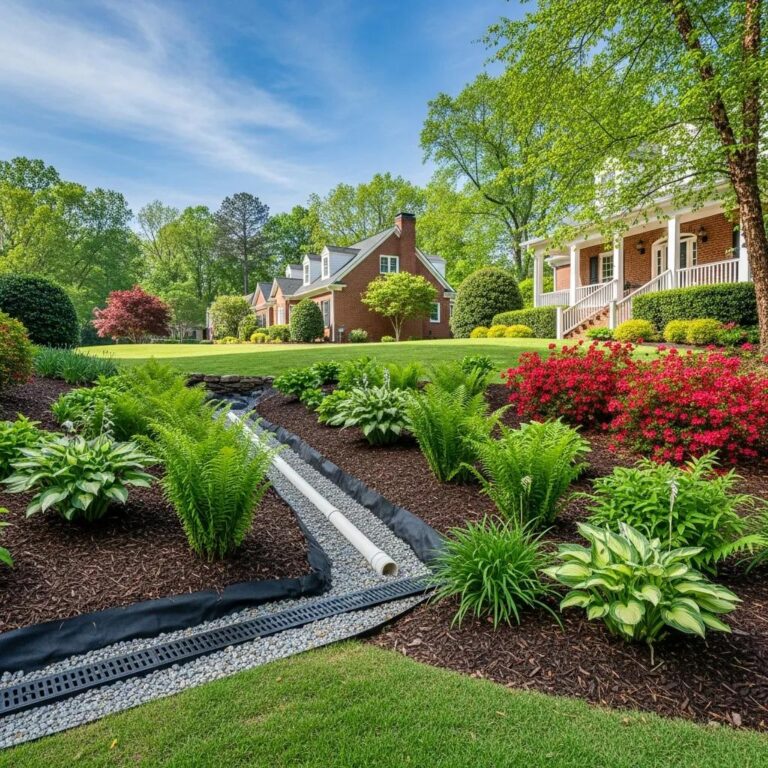
Retaining walls convert unstable slopes into flat, usable terraces, cutting erosion, steep mowing, and slope-related labor. Structurally designed segmental or gravity walls hold soil, manage drainage, and create flatter planting or patio areas that are much easier to maintain than continuous slopes. Material choices include interlocking concrete blocks, natural stone, or timber; matching materials and drainage systems to Atlanta’s clay soils and seasonal moisture is key to avoiding settlement problems. A drainage layer and weep systems behind walls prevent hydrostatic pressure that leads to failures and added maintenance. By stabilizing landscape zones, retaining walls shift routine work from slope repairs to occasional inspections and small touch-ups.
What Are the Advantages of Artificial Turf for a Low Maintenance Lawn?
Artificial turf replaces a living lawn with a synthetic surface that removes mowing, routine fertilizing, and most irrigation—giving a green look year-round. Proper installation needs a stable base, engineered drainage, and the right infill for comfort and durability; in Atlanta, paying attention to subsurface drainage prevents puddling during heavy rains and helps fast drying. Maintenance is simple: brush high-traffic areas, remove debris, rinse as needed, and top up infill per manufacturer recommendations. Modern turf handles pets and play areas well with the right infill and base, letting homeowners enjoy a lawn-like look without the time and water costs of natural grass. Base and drainage quality determine how well turf keeps its low-maintenance promise.
How Do Fire Pits and Outdoor Kitchens Enhance Outdoor Living with Minimal Maintenance?
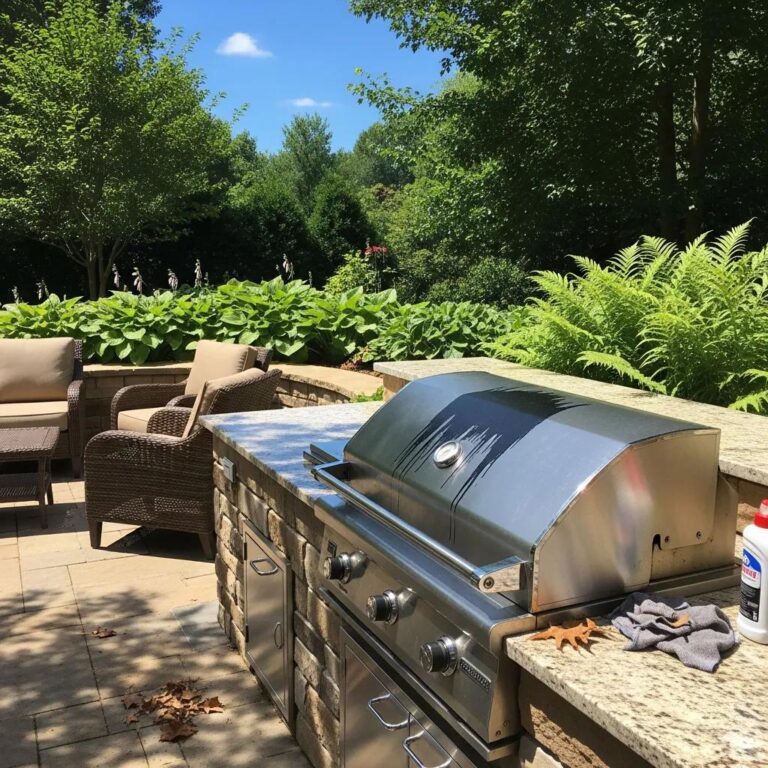
Fire features and outdoor kitchens expand living space and can be kept low-maintenance when built with durable materials and smart fuel choices. Gas fire pits and gas grills cut ash and messy cleanup compared with wood burning; stainless steel appliances and stone surrounds resist corrosion and clean easily. Thoughtful layouts—accessible storage, protective covers, and placement away from heavy planting—reduce debris build-up and simplify seasonal care. Routine tasks include surface cleaning, checking gas lines and burners, and winterizing where appropriate. These features increase usable outdoor time while adding manageable, predictable maintenance compared with large planted areas.
How Does Landscape Lighting Offer Low Energy Use and High Impact?
Landscape lighting delivers strong visual and functional returns with very low ongoing energy and upkeep when you choose LED fixtures, low-voltage systems, and automation. LEDs last far longer than incandescent or halogen bulbs and use minimal power; timers and motion sensors cut run time and remove daily switching. Correct fixture selection and installation—sealed connections and buried cable where needed—keep repairs rare. Typical maintenance is seasonal cleaning, checking timers or controllers, and infrequent bulb replacements years apart. Thoughtfully specified lighting improves safety and curb appeal with almost no extra maintenance if done right.
How Can You Design a Low Maintenance Hardscape Tailored for Atlanta’s Climate?
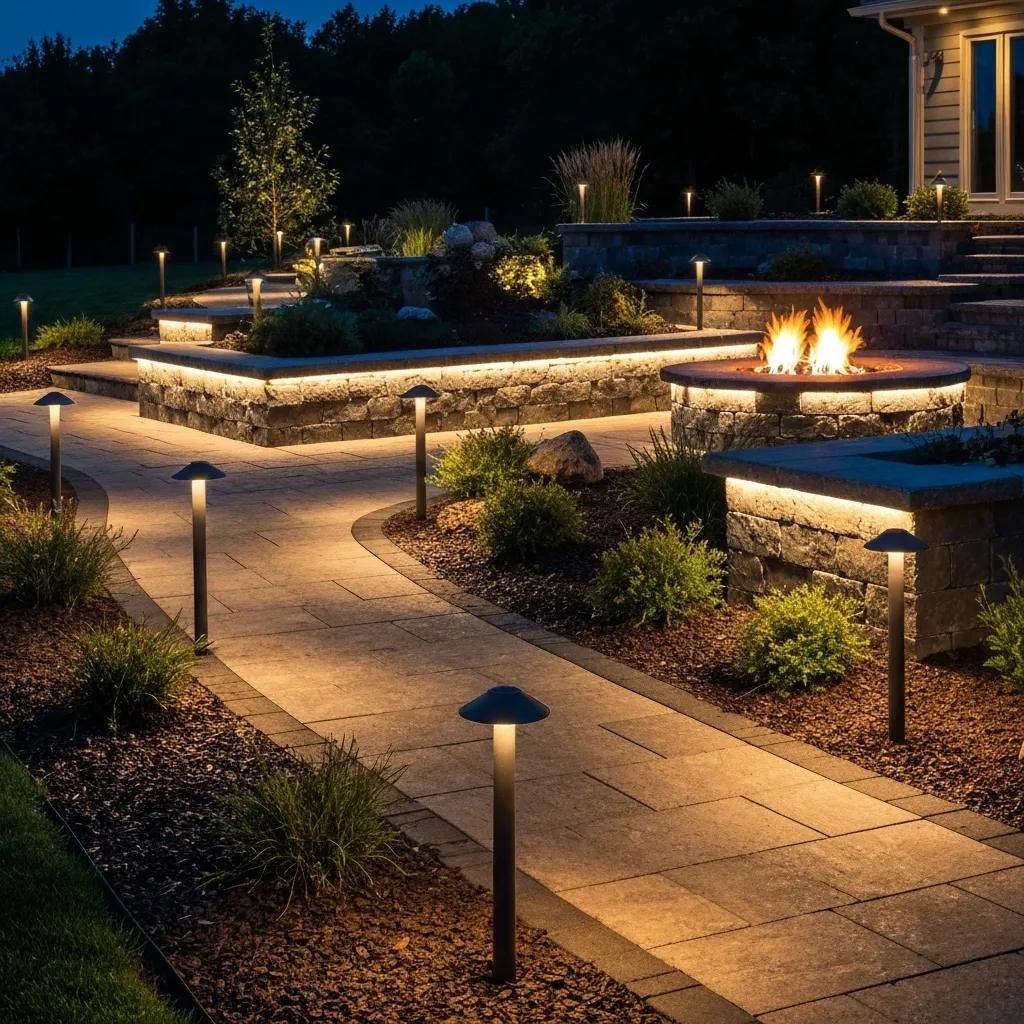
Designing low-maintenance hardscape for Atlanta starts with a site-focused assessment: slope, soil composition (especially clay), drainage patterns, and sun/shade. From there, pick materials that tolerate heat and humidity, plan drainage and permeable surfaces, and limit irrigation with focused planting. Key Atlanta considerations include handling heavy summer rain with stormwater management, using low-porosity, freeze-thaw resistant materials where appropriate, and minimizing turf where it makes sense. The goal is a resilient design that cuts routine care while delivering long-term performance.
Use the material comparison below to guide choices for durability, drainage, and suitability on Atlanta’s clay soils.
| Material | Durability | Drainage Performance | Clay Soil Suitability |
|---|---|---|---|
| Pavers (concrete/interlocking) | High with maintenance | Good; permeable options available | Suitable with a proper sub-base to avoid puddling |
| Natural stone (flagstone) | Very high | Moderate; depends on installation | Requires an engineered drainage base |
| Concrete (poured/stamped) | High | Impermeable unless specified with joints | Use with engineered grading and drainage |
| Artificial turf | Moderate-high | Very suitable with a proper base and jointing | Suitable with proper sub-base to avoid puddling |
This comparison highlights trade-offs and reinforces that base prep and drainage choices are often more important than the surface alone. The next sections walk through a practical, client-focused design process and integration tactics.
What Is the Personalized Design Process with Atlanta Hardscape Kings?
We follow a site-driven, collaborative design process that delivers low-maintenance results: assess the property, develop a plan, select materials that match performance goals, then install with professional follow-up. A typical project begins with an on-site consultation to document drainage, slope, and soil, then moves to a custom design focused on durability and low upkeep. We discuss materials and installation details, proceed with engineered bases, drainage components, and professional installation, and finish with a walkthrough and maintenance guidance. As a family-owned local team, Atlanta Hardscape Kings emphasizes craftsmanship, durable solutions, and warranty-backed work—homeowners who want a truly low-maintenance yard often choose this full-service path to ensure design intent is realized on site.
How Do You Choose Materials for Longevity and Aesthetic Appeal in Atlanta?
Pick materials that balance durability with the look you want, while accounting for heat, humidity, and seasonal moisture. Favor low-porosity stones, quality pavers with stabilized joints, and corrosion-resistant metals for outdoor kitchens or fixtures; choose slip-resistant finishes that handle summer heat without excessive expansion. Drainage is a primary selection factor—consider permeable pavers or linear drains and gravel trenches where runoff concentrates. Factor in maintenance needs such as sealing cycles for stone or occasional joint re-sanding for pavers, and pick textures that hide normal wear. In Atlanta, longevity is driven less by brand and more by matching installation technique to site conditions.
How Can Hardscape Be Integrated with Drought-Tolerant Softscape for Easy Care?
Combine minimal, drought-tolerant plantings with hardscape to add softness without reintroducing heavy maintenance. Use focused planting islands, narrow mulched beds, and native species in sheltered microclimates to cut watering and pruning. Mulch, drip irrigation with zoned controls, and proper spacing suppress weeds and concentrate care where needed, while permeable edges and small bioswales manage runoff and support localized planting without creating continuous irrigation zones. Planning these limited plant areas up front ensures they enhance the design without undermining low-care goals.
How Does Low Maintenance Hardscaping Increase Property Value In Atlanta?

For many Atlanta homes, low maintenance hardscaping is one of the most effective ways to boost property value without adding ongoing work. Well-designed patios, walkways, retaining walls, and seating areas turn underused yard space into true outdoor living rooms where people can relax, entertain, and dine. Buyers increasingly look for move-in-ready exteriors that do not require constant mowing, reseeding, or replanting, so a yard built around low maintenance landscaping often stands out in a competitive market.
Hardscape elements also send a clear signal about durability and long-term upkeep. Quality pavers, stone, and well-built retaining solutions suggest that drainage, grading, and soil movement have been taken seriously, which reassures buyers who know Atlanta’s clay soils and heavy rains can be hard on foundations and lawns. When these features are combined with simple, tidy plantings, the result is a clean, finished look that photographs well, shows well, and feels easy to care for. That combination of utility, appearance, and reduced effort tends to support stronger appraisals and better buyer impressions.
What Are The Long-Term Cost Savings Of Hardscaping Compared To Traditional Landscaping?
Although hardscapes often require a higher upfront investment than turf or basic plant beds, they can deliver meaningful savings over time. A conventional lawn demands weekly mowing for much of the year, regular edging, fertilizer, weed control, and frequent irrigation during hot Atlanta summers. By contrast, a properly installed patio or courtyard space mainly needs occasional sweeping, spot cleaning, and periodic joint or sealant maintenance.
Those differences show up in both water bills and service costs. Replacing large lawn areas with hard surfaces and compact planting beds reduces the square footage that must be watered and treated. If you choose drought-tolerant plants for the remaining beds and support them with efficient irrigation, the savings compound year after year. Low maintenance landscaping also reduces the likelihood of major landscape overhauls when neglected turf or overcrowded beds reach a point where they need to be completely redone. Over a decade or more, many homeowners find that the operational savings and reduced labor more than offset the initial cost of thoughtful hardscape design.
How Does Hardscaping Improve Outdoor Living And Curb Appeal?
Hardscaping helps organize a yard into clear, usable zones that feel like natural extensions of the home. A dining patio near the kitchen, a small fire pit terrace, or a paved path that ties side yards to the back garden all make day-to-day life outdoors more comfortable. Because these surfaces stay usable after rain and during shoulder seasons, families often spend more time outside and host more often, which increases the perceived value of the space.
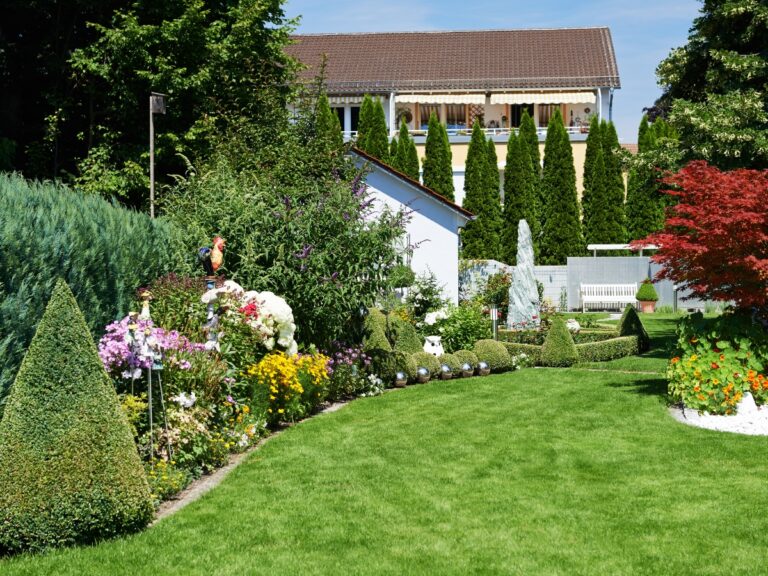
From the street, well-planned hardscape reads as intentional design rather than patchwork improvement. Defined edges, consistent materials, and subtle lighting create structure and depth, which draws the eye and make the property feel cared for. Small, low maintenance planting pockets soften the stone and add seasonal interest without overwhelming the homeowner with pruning or weeding. For buyers who want attractive but low maintenance landscaping, that balance of structure, color, and easy upkeep is especially appealing and can give one Atlanta property an advantage over others in the same price range.
What Are the Cost Considerations for Low Maintenance Hardscaping in Atlanta?

Costs hinge on a few primary drivers—materials, site preparation, drainage solutions, and labor complexity—with site-specific issues like clay soil and slope often increasing scope and price. The main cost factor is preparatory work: a properly engineered base and drainage system lowers future maintenance but adds to initial expense. Expect variation based on material quality, site access, grading needs, and any structural work like retaining walls or utility moves. Clear ranges and transparent drivers set realistic expectations; the following subsections outline how to think about overall cost and what affects pricing for patios, walls, and turf.
Below is a cost-focused table that outlines key cost drivers and representative Atlanta price ranges to guide budgeting conversations.
| Element | Cost Drivers | Representative Atlanta Price Range |
|---|---|---|
| Paver patio (standard) | Materials, base prep, jointing, edging | $1,400–$2,500 (12’x12′) to $3,800–$6,800 (20’x20′) |
| Retaining wall (segmental) | Drainage, footings, wall height, labor | $8,000–$25,000+ |
| Artificial turf | Excavation, base, drainage, turf quality | Varies by area & infill |
These representative ranges show how site conditions and finish level drive total cost; for accurate numbers, homeowners should request an on-site evaluation. Budgeting starts with understanding what affects those ranges—the next subsection explains the main drivers.
How Much Does Low Maintenance Hardscaping Typically Cost in Atlanta?
Costs vary widely by scope and site: a small patio on a flat, accessible lot needs far less prep than a multi-level terrace with retaining walls on a steep site. Key cost drivers include excavation and grading, drainage and erosion control, material choices (natural stone vs. manufactured pavers), and skilled labor for structural work. While exact budgets come from a site visit, homeowners get the best long-term value by prioritizing drainage and base work—these reduce future maintenance and repair costs. Phasing projects and choosing durable, low maintenance materials can also spread costs while securing long-term savings.
What Factors Influence the Cost of Patios, Retaining Walls, and Artificial Turf?
Each major hardscape element has its own cost levers: patios depend on material and base complexity; retaining walls depend on height, reinforcement, and drainage; artificial turf scales with area and sub-base drainage engineering. Access constraints, existing utilities, permits, and stabilization needs add labor and equipment time, while premium features—custom stonework, integrated lighting, or built-in appliances—raise material and installation costs. Strategies to manage cost include phasing, choosing durable but cost-effective materials, and investing in drainage and base quality to limit lifecycle expenses. Knowing these factors lets homeowners balance upfront cost with long-term ease-of-care and value.
How Can Atlanta Hardscape Kings Support Your Effortless Outdoor Oasis?

Atlanta Hardscape Kings helps metro Atlanta homeowners turn high-maintenance yards into functional, attractive spaces that are easier to care for season after season. Instead of managing large lawns and constantly trimming overgrown beds, you can lean on well-planned patios, walkways, retaining walls, and outdoor living areas that stay usable with far less routine work. The team focuses on designs that balance everyday livability with long-term durability, which is exactly what most people are looking for when they search for low maintenance landscaping solutions.
Their projects often combine several elements into a single plan. A paver patio might link to a fire pit area, artificial turf play zone, or outdoor kitchen, with lighting woven through for safety and evening use. By reducing the amount of turf and consolidating plantings into smaller, defined beds, these designs cut back on mowing, watering, and weeding without leaving the yard feeling stark or overly hardscaped. Every project is tailored to the site, so grading, drainage, and material choices are matched to the lot rather than forced into a one-size-fits-all layout.
What Is Atlanta Hardscape Kings’ Commitment To Quality And Customer Satisfaction?
As a family-owned company, Atlanta Hardscape Kings builds around a straightforward promise: solid craftsmanship, durable materials, and clear communication from the first conversation through final walkthrough. Projects are planned with Atlanta’s clay soils, heavy rain, and summer heat in mind, which means bases, retaining walls, and drainage details are treated as core parts of the design instead of afterthoughts. That technical focus supports the broader goal of low maintenance landscaping by preventing settling, pooling water, and premature surface failure.
Quality control extends beyond installation. The company places emphasis on material selection, proper compaction, and edge restraint so patios and walkways hold their shape for years. Artificial turf is installed with attention to drainage and infill so it stays comfortable and functional instead of becoming a maintenance headache. Warranty coverage and responsive follow-up give homeowners additional confidence that their investment is protected and that any questions after completion will be addressed. Over time, this approach builds trust and reinforces the idea that an attractive, low maintenance yard should also feel structurally sound and dependable.
How Do Homeowners Typically Begin A Low Maintenance Landscaping Project?
Most low maintenance landscaping projects start with a focused site review rather than jumping straight into product choices. For Atlanta Hardscape Kings, that usually means an on-site visit to look at slope, existing drainage patterns, sun exposure, and how the household currently uses the yard. These observations shape early recommendations, such as where a patio will drain best, which areas are good candidates for artificial turf, and how retaining walls or steps might make a steep lot more usable.
From there, the team develops a concept that outlines layout, primary hardscape features, and key material options. Homeowners can review this plan, ask questions about maintenance expectations, and adjust the scope to fit budget and timeline. Once a final design is agreed on, scheduling and construction details are clarified so everyone understands the sequence of work. The result is a practical, documented path from idea to finished project that keeps long-term upkeep in view. For many Atlanta homeowners, that process is what turns the idea of low maintenance landscaping into a finished outdoor space that is truly easier to live with year after year.
What Are the Best Practices for Maintaining Your Low Maintenance Hardscape?

Even the most low maintenance landscaping benefits from a simple routine so the hardscape continues to look sharp and perform well year after year. The goal is not constant work, but light, consistent attention that prevents small issues from turning into expensive repairs. A basic plan usually includes sweeping paved areas, washing surfaces when grime builds up, checking joints and edges, and making sure drainage is working the way it was designed. If your yard includes artificial turf or built features like retaining walls, fire pits, or outdoor kitchens, they also do best with quick seasonal checkups.
A practical approach is to think in terms of weekly, seasonal, and annual tasks. Weekly or biweekly, a quick walk around the patio, walkways, and outdoor rooms keeps you aware of new stains, loose debris, or minor settling. At the change of seasons, it helps to set aside a little time to rinse surfaces, inspect joints, and clear any drainage points. Once a year, a more thorough clean and inspection protects the structure of your hardscape and keeps your low maintenance landscaping living up to its name.
How Do You Keep Patios And Walkways Clean And Durable?
Patios and walkways tend to be the backbone of low maintenance landscaping, so keeping them in good shape gives the whole yard a cared-for look. Regular sweeping removes grit and leaves that can stain or wear the surface over time. When a simple sweep is not enough, a gentle wash with a low-pressure setting and a mild cleaner will usually lift dirt without damaging pavers or stone. It is better to use light pressure and take your time than to blast joints or finishes and create new problems.
Joints between pavers or slabs are worth a closer look a few times a year. If you notice sand washing out, small gaps forming, or weeds beginning to appear, re-sanding with the correct joint or polymeric sand closes those openings and helps lock the surface back together. Sealing stone or concrete on the schedule recommended by the manufacturer protects color and makes future cleaning easier, especially in high-traffic cooking or dining areas. When you see a paver sink or an edge start to move, addressing it early with a small repair is far easier than waiting until a larger section needs to be reset.
What Are Simple Maintenance Tips For Artificial Turf And Retaining Walls?
Artificial turf and retaining walls are popular features in low maintenance landscaping because they replace ongoing chores with structures that mostly take care of themselves. They do still benefit from light upkeep. For turf, the basics are to remove leaves and branches before they break down, occasionally brush the fibers in high traffic zones to keep them standing upright, and rinse as needed to handle dust or pet use. Over a period of years, your installer may recommend refreshing infill so cushioning and drainage stay consistent, especially in play or sports areas.
Retaining walls mainly need visual checks and clear drainage. After heavy rain, take a moment to look at the face of the wall and the ground above and below it. You want to see water moving through designated outlets rather than pooling behind the wall or at its base. If you notice blocked weep holes, clear them so water can escape as intended. Any signs of bulging, cracking, or significant movement should be addressed quickly with a professional evaluation so the issue stays manageable.
A simple seasonal habit of walking your property, clearing debris, checking drainage points, and testing lighting or gas features will usually keep a hardscaped yard in good condition. With that level of attention, the main promise of low maintenance landscaping holds true: you spend far more time enjoying your outdoor space than you do working on it.
What Are Common Questions About Low landscaping and Hardscaping in Atlanta?

Homeowners often ask what “low maintenance” actually means here, which materials work best in clay soils, how to combine hardscape with native plants, and how much time and money can really be saved. Answering these questions means linking measurable maintenance metrics—less watering, fewer weeding hours, and reduced labor—with the design choices that deliver those results. The sections that follow answer those common questions with practical, action-focused guidance.
What Defines a Low Maintenance Landscape in Atlanta’s Climate?
In Atlanta, a low-maintenance landscape reduces routine work by shrinking irrigated lawn areas, using durable surfaces, and specifying plant palettes and irrigation systems that match local rainfall and soils. Measurable goals include fewer weekly maintenance hours, less irrigation runtime, and reduced fertilizer and pesticide use versus conventional landscapes. Proper drainage and engineered bases are essential on clay soils that hold water and can cause settling—without those measures, even low-maintenance materials can need extra care. The realistic aim is predictable, limited upkeep, not zero upkeep.
Which Hardscape Materials Are Best for Atlanta’s Soil and Weather?
Good materials for Atlanta share traits: low porosity, freeze-thaw resistance, and compatibility with engineered sub-bases for clay soils. Interlocking concrete pavers and well-installed natural stone are reliable when paired with a compacted aggregate base and proper joint systems; permeable pavers help manage runoff where appropriate. Concrete elements should include control joints and positive slope for drainage, and metals should be corrosion-resistant for our humid conditions. The critical rule is pairing material choice with proper sub-base and drainage to avoid settlement and prolong service life.
How Can You Combine Hardscaping with Native Plants for Easy Yard Care?
Pair hardscape with native, drought-tolerant plantings by concentrating them into small, strategic zones that add color and biodiversity without high upkeep. Use mulched islands, narrow beds, and sheltered microclimates to lower water and pruning needs; group plants by irrigation needs and use drip systems with zones to minimize waste. Small beds are easier to manage than continuous borders, and permeable edges or bioswales can handle runoff without creating new irrigation zones. Thoughtful placement during design keeps planting from undermining your low-maintenance goals.
How Much Time and Money Can You Save with Low Maintenance Hardscaping?
Savings come from cutting routine tasks—mowing, frequent irrigation, fertilizing, and pest control—and from fewer emergency repairs when drainage and base work are done up front. Homeowners typically reclaim hours each month from reduced lawn care, and annual water and labor costs fall accordingly. While initial costs may be higher, lifecycle analysis often favors hardscaping once maintenance savings and increased property value are considered. For exact projections, compare your current maintenance budget and request a site-specific estimate to quantify potential returns.
Conclusion
An effortless, beautiful Atlanta yard is within reach by embracing low-maintenance hardscaping solutions. Patios, walkways, and retaining walls crafted from durable materials provide year-round structure and style without the constant upkeep of traditional lawns. At Atlanta Hardscape Kings, we design and install custom hardscapes that transform your outdoor space into a stunning, worry-free retreat. Ready to trade weekend yard work for weekend relaxation? Call (470) 606-7895 or visit our website to request your free estimate today. Let’s build an outdoor oasis that works for you, not the other way around.